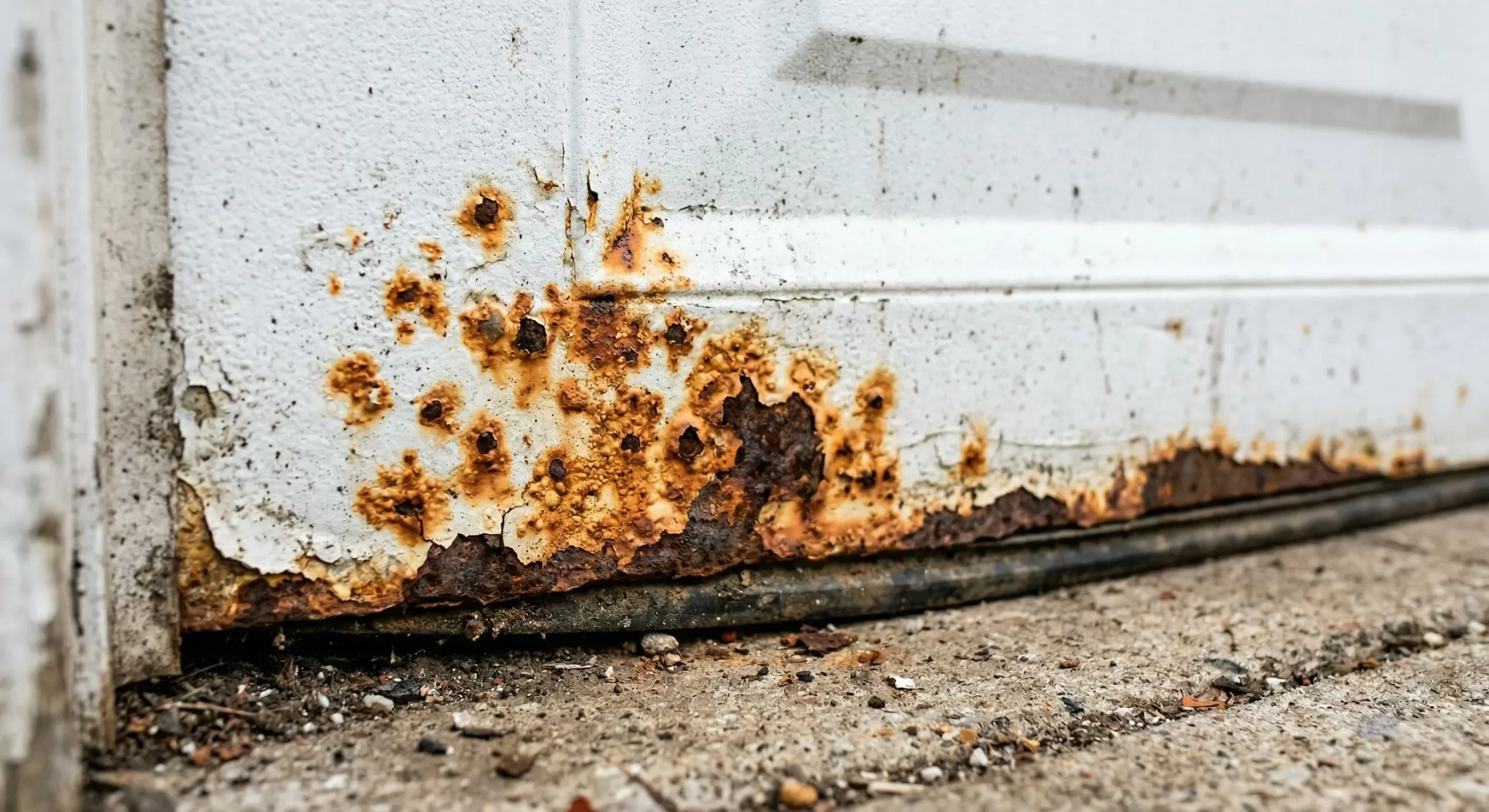
A little rust spot today can be a hole in your panel six months from now. Here is how to tell what you are dealing with and what to do next.
Rust does not care how new your garage door looks. All it needs is a small scratch, a little moisture, and time. Once iron oxide gets under the paint, it spreads quietly until you have a real problem.
Most homeowners in Las Vegas first notice rust on the bottom panels or at the edges of the door. The good news is that catching it early usually means a simple fix. If you are already dealing with a door that is not working properly, check out our full guide to garage door repair in Las Vegas before going further.
This guide walks you through every rust stage what each one means, what you can fix yourself, and when calling a technician is the only safe option.
Written by Shlomi Perets, garage door technician with 14 years of field experience. He has inspected hundreds of rusted doors across Las Vegas, Henderson, and Summerlin.
What Actually Causes Garage Door Rust?
Rust is iron oxide. It forms when steel or iron is exposed to oxygen and water at the same time. That chemical reaction starts the moment bare metal is unprotected. It does not stop on its own.
The most common starting point is a scratch or chip in the paint. Even a small nick from a bicycle handlebar or a rogue stone exposes the raw metal underneath. From there, moisture does the rest.
Six Things That Speed Up Rust on a Garage Door
- Moisture from rain, condensation, or humidity sitting against the metal surface
- Paint chips and scratches that expose raw steel to air and water
- Worn or cracked weatherstripping that lets water pool at the bottom panel
- Dirt and debris buildup that holds moisture against the surface for longer
- Poor ventilation inside the garage creating a humid environment around the door
- Low-quality steel panels without a proper galvanized coating from the factory
Does Las Vegas Get Garage Door Rust?
Yes, and it surprises most homeowners. Las Vegas does not have rain or snow most of the year, but monsoon season brings real humidity. That moisture hits hot metal panels, condenses, and sits. UV damage from 300 plus sunny days per year cracks paint faster than in cooler climates, exposing the steel underneath.
Shlomi Perets sees it regularly on 15 to 20 year old homes in the Las Vegas valley: The bottom two panels almost always go first. Water runs down the door and pools at the base. If the bottom seal is worn, that moisture never fully dries out.
What Is the Difference Between Surface Rust and Corrosion?
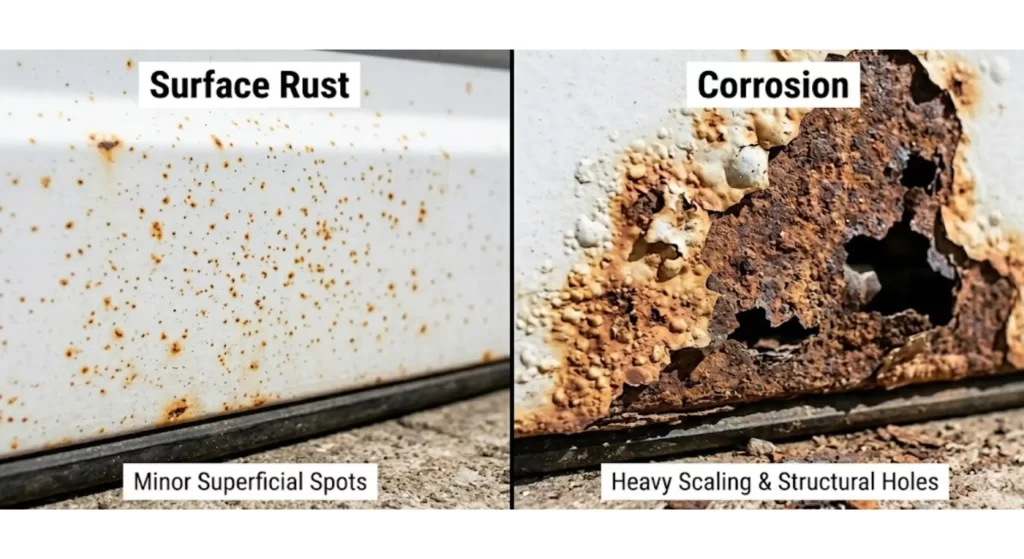
This is the most important question to answer before you decide what to do. Surface rust and corrosion look similar from a distance but they are completely different problems.
Surface rust sits on top of the metal. It has not eaten through the panel. The metal underneath is still solid. You can feel it with your finger and it will feel rough but the panel itself will not flex or give when you press it.
How to Tell Which Stage You Are Looking At
- Surface rust: orange or brown discoloration, rough texture, paint bubbling but panel is firm
- Moderate rust: paint flaking off in chunks, visible pitting in the metal, slightly soft spots
- Corrosion: holes visible or forming, panel flexes when pressed, metal flakes away when touched
Surface rust can be repaired. Corrosion usually means the panel needs replacing. If you press on a rusted area and it moves like thin cardboard, you are past the repair stage on that panel.
How Do You Fix Surface Rust on a Garage Door?
Surface rust is a DIY repair for most homeowners. You need sandpaper, rust-inhibiting primer, and exterior metal paint. The full process takes a few hours on a dry day.
Step by Step Rust Repair for Garage Door Panels
- Sand the rusted area with 80 to 120 grit sandpaper until the rust is gone and bare metal is smooth
- Clean the area with a damp cloth and let it dry completely before going further
- Apply a rust-inhibiting primer, one that contains zinc phosphate works best on steel
- Let the primer dry fully usually one to two hours depending on humidity
- Apply two thin coats of exterior metal paint, matching your door color as close as possible
- Finish with an automotive wax or clear sealant coat to protect against future moisture
One important rule: never paint over rust without removing it first. Paint traps moisture underneath and the rust spreads faster. The repair will look fine for a few weeks and then bubble right back up.
If the rusted area has small pits or holes that are not yet through the panel, use auto body filler to fill them before priming. Sand it flush, then prime and paint as normal.
When Should You Replace a Rusted Garage Door Panel Instead of Repairing It?
Panel replacement makes more sense than repair once the rust has eaten through the metal or spread across more than one third of a single panel. At that point the repair materials cost almost as much as a new panel, and the result still looks patchy.
There is also a structural question. A corroded panel cannot hold its shape under the weight and movement of the door. When panels sag or the door moves unevenly, that is a safety issue. Learn more about garage door panel replacement in Las Vegas and what the process involves before you decide.
A good rule Shlomi uses in the field: if the door is under 10 years old and only one panel is affected, repair or replace that single panel. If the door is 15 years or older and two or more panels show corrosion, replacing the full door is almost always the better investment.
Signs That Mean the Full Door Needs Replacing
- Multiple panels showing deep rust or holes, not just surface discoloration
- Door moves unevenly, sags, or scrapes the track when opening or closing
- The door is 15 or more years old and the original builder-grade steel is showing its age
- Rust has reached the bottom rail or the roller brackets, affecting door alignment
- Repair estimates are coming back at more than 50 percent of a new door cost
Can Rusted Springs or Cables Be Fixed or Do They Need Replacing?
Rusted springs and cables cannot be repaired. They need to be replaced. This is not a surface issue you can sand down and paint over.
Springs are under extreme tension a standard torsion spring stores enough mechanical energy to cause serious injury if it snaps. Corrosion weakens the metal coil and makes it unpredictable. A rusty spring can break without warning, even when the door has not been opened recently.
The same applies to lift cables. Once the steel strands begin corroding, the cable loses tensile strength and can snap under load. If you spot rust on your springs or cables, stop using the door and call a technician. See what garage door spring replacement Las Vegas involves and why it requires a licensed tech.
Rollers and hinges with surface rust can sometimes be cleaned and lubricated if caught early. But if the roller wheel is pitted or the hinge has visible corrosion at the bolt holes, replace the part. These are inexpensive components and a corroded hinge can damage the panel around it.
How Do You Stop Garage Door Rust From Coming Back?
Prevention is cheaper than any repair. Once you have cleaned up existing rust, these habits keep it from coming back.
Six Maintenance Habits That Prevent Rust
- Wash the door every three to four months with mild soap and water to remove dust and debris that holds moisture
- Touch up paint chips and scratches the same week you spot them bare metal rusts within days in humid conditions
- Check and replace the bottom seal and weatherstripping annually worn seals are the number one cause of bottom panel rust
- Apply automotive wax to painted panels twice a year as a moisture barrier
- Lubricate hinges, rollers, and springs with a silicone-based lubricant every six months do not use WD-40 as a lubricant, it attracts dust
- Schedule a professional tune-up once a year a technician spots early rust on hardware that is hard to see from ground level
Frequently Asked Questions About Garage Door Rust
Can I paint over rust on my garage door?
No. Painting over rust without removing it first traps moisture underneath and makes it spread faster. You must sand or wire-brush the rust off, apply a rust-inhibiting primer, then repaint with exterior metal paint.
What is the difference between surface rust and corrosion on a garage door?
Surface rust is oxidation on top of the metal that has not yet eaten through. Corrosion means the metal itself has deteriorated and lost structural strength. Surface rust can be repaired. Corrosion usually means the panel or part needs replacing.
Does Las Vegas get garage door rust even without rain or snow?
Yes. Monsoon season brings moisture and humidity that sits against metal panels. UV damage cracks paint and exposes raw metal. Dust and debris hold moisture against the surface. Las Vegas doors rust more slowly than coastal areas but it still happens, especially on doors 10 or more years old.
How do I know if my garage door rust is too bad to repair?
If you can poke a screwdriver through the panel, see holes or flaking metal, or the door sags or moves unevenly, the rust has gone past surface level. At that point repair costs often exceed replacement value, especially on doors older than 15 years.
Can rusty garage door springs or cables be repaired or do they need replacing?
Springs and cables with heavy rust must be replaced, not repaired. They are under extreme tension and corroded metal can snap without warning. This is not a DIY job. A licensed technician should handle any spring or cable work.