
Your NV Energy bill jumps every summer and you blame the heat. But the heat is only the trigger. The real culprit might be the 18-foot uninsulated steel door at the front of your home letting summer sun straight into the structure.
An uninsulated single-layer steel garage door on an attached Las Vegas home adds between $30 and $80 to your NV Energy bill every summer month. Over a 5-month cooling season from May through September, that is $150 to $400 in cooling costs you did not need to spend.
Most homeowners never think about the garage door as an energy issue. They blame the AC unit or the windows. The garage door is the largest single uninsulated surface on most Las Vegas homes and the easiest one to fix. For broader garage door service options, see our garage door repair in Las Vegas page.
This guide is written by Shlomi Perets, a garage door technician with 14 years of field experience across Las Vegas, Henderson, Summerlin, and North Las Vegas. He measures garage temperatures during summer service calls regularly and explains here exactly how your door affects your energy bill and what to do about it.
How Hot Does a Las Vegas Garage Actually Get?
Most homeowners underestimate the temperatures their garage reaches. Outside air on a July afternoon hits 110 degrees Fahrenheit. The interior of an uninsulated garage with a steel door facing south or west reaches 130 to 150 degrees on the same afternoon.
That extreme heat does three things. It radiates into the shared wall with your living space. It conducts up through the ceiling into any room above the garage. And it forces your home air conditioner to work harder against a hot adjacent space that should be neutral thermal mass.
What Drives Garage Temperatures Above Outside Air
- Direct sun on the door surface: A south or west-facing steel garage door absorbs solar radiation throughout the afternoon. The surface temperature can reach 160 degrees on a 110-degree day.
- Heat trapped inside: Garages have minimal ventilation. Hot air that builds up during the day has no easy escape route once the sun moves off the door.
- No thermal break: Single-layer steel doors transfer the exterior surface temperature directly into the garage interior. There is nothing to slow the heat down.
- Concrete floor heat storage: The concrete slab absorbs heat during the day and releases it slowly into the evening, keeping the garage hot well after sunset..
Field measurement from Shlomi: I measure garage temperatures during summer service calls. On a typical July afternoon at 3 PM in Summerlin, I record 135 to 145 degrees inside garages with single-layer steel doors. Homes with R-12 or higher insulated doors stay 15 to 25 degrees cooler in the same conditions. The difference is real and measurable.
How Does Your Garage Door Actually Affect Your NV Energy Bill?
The garage door affects your energy bill through three different mechanisms. Understanding each one tells you which fix matters most for your specific home.
Heat Transfer Through the Door Itself
A single-layer steel door has an R-value close to zero. R-value measures resistance to heat flow. The higher the R-value, the slower heat moves through the material. Zero R-value means heat moves through the door nearly as fast as it would through open air.
When the outside surface of the door reaches 160 degrees, the inside surface is roughly the same temperature within minutes. That heat then radiates into the garage air, the concrete floor, and the wall shared with your living space. An insulated R-12 to R-18 door slows this transfer dramatically.
Air Leakage Around the Door Perimeter
Even a well-insulated door leaks energy if the weather stripping around the perimeter is damaged. Las Vegas UV destroys rubber seals faster than in any other climate. Bottom seals crack and flatten. Side stripping pulls away from the frame. Top seals lose their compression.
Air leakage allows hot outside air to enter the garage and cool conditioned air to escape if you ever cool the garage. The effect is the same as leaving a window cracked open all summer.
Heat Radiation Into the Living Space
The wall shared between your garage and your home is the path heat takes from the garage into your living space. Builder-grade construction in Las Vegas homes typically includes R-13 wall insulation between the garage and the rest of the home. That is reasonable insulation but not impenetrable.
If garage temperatures sit at 140 degrees and your living space is 75 degrees, the temperature differential drives heat through the shared wall continuously. Your AC compensates by running longer cycles, using more electricity, and costing you money on every NV Energy bill.
Five-Test Garage Door Energy Audit You Can Do Yourself
Before spending any money on upgrades, do this 10-minute self-audit. It tells you exactly where your door is losing energy and which fix will deliver the most value. No tools required except your hand and a smartphone.
Test 1: The Daylight Gap Test
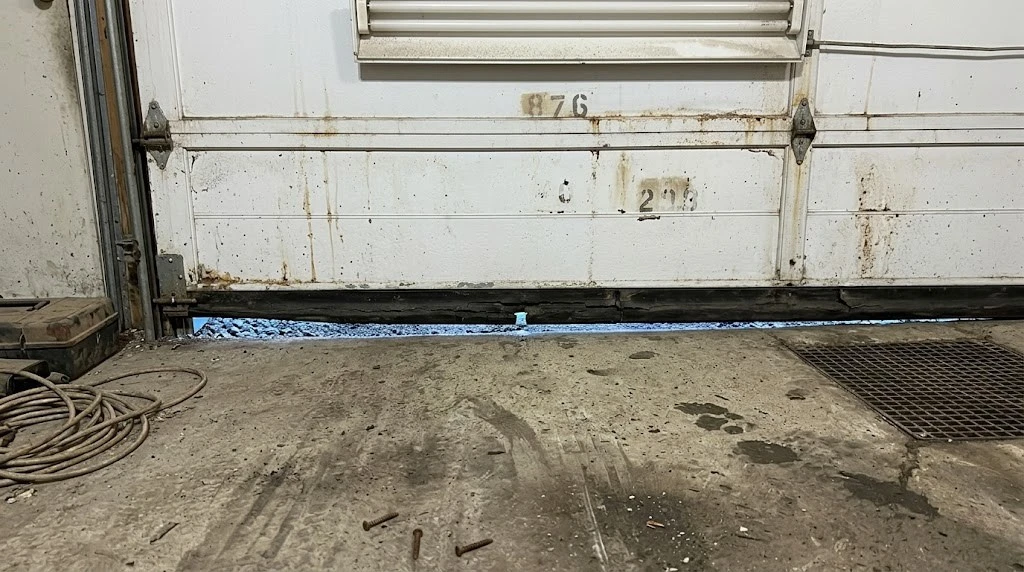
Stand inside the closed garage during the day. Turn off the garage lights. Look around the perimeter of the door. Check the top, both sides, and the bottom. Any visible daylight means an air gap. Even a hairline of light along the bottom seal represents significant heat infiltration during Las Vegas summer afternoons.
Test 2: The Door Panel Touch Test
On a hot afternoon between 2 PM and 5 PM, place your palm flat on the inside of the garage door panel. If the panel feels noticeably warm or hot to the touch, your door is conducting outside heat directly into your garage. A properly insulated door should feel only slightly warmer than ambient garage air.
Test 3: The Bottom Seal Inspection
Look at the rubber weather seal along the bottom of the door. It should be flexible, intact, and make full contact with the concrete floor when the door is closed. Cracked, flat, or pulled-away seals are letting outside air directly into the garage. This is the easiest and cheapest fix on this entire list, often under $30 in parts.
Test 4: The Side and Top Weather Stripping Check
Inspect the rubber stripping that runs along the sides and top of the door frame. The stripping should compress against the door when closed. Brittle, cracked, missing, or compressed-flat stripping needs replacement. UV damage in Las Vegas degrades this material faster than in other climates. Plan to replace it every 5 to 7 years.
Replacing weather stripping is typically included in a complete tune-up. See our quiet garage door tune-up Las Vegas guide for the full list of tune-up tasks that address energy efficiency along with noise reduction.
Test 5: Garage Temperature Compared to Outside Air
At 4 PM on a hot summer day, compare garage interior temperature to outside air temperature. Use a smartphone weather app for outside and any thermometer for inside. If your garage is within 5 to 10 degrees of outside air, the door is doing reasonable insulation work. If the garage is significantly hotter than outside, the door is acting as a thermal sink absorbing radiant heat all day.
What R-Value Should Your Garage Door Be in Las Vegas?
R-value recommendations vary by climate and home configuration. For Las Vegas conditions, these are the practical guidelines Shlomi recommends based on field experience.
R-Value by Home Type for Las Vegas
- Detached garage, no shared walls: R-6 to R-9 is acceptable. The garage does not affect the living space directly. Insulation matters mainly for protecting stored items and any workspace use.
- Attached garage, no rooms above: R-12 minimum. This is the baseline for attached garages in Las Vegas to reduce heat radiation through the shared wall.
- Attached garage with bedroom above: R-16 to R-18 minimum. The room above shares both a wall and a ceiling with the garage. Higher R-value is essential for comfort and energy savings.
- Garage door facing south or west: Add 2 to 4 R-value points to the baseline. Afternoon sun exposure dramatically increases the thermal load.
- Large home or three-car garage: R-16 or higher. More door surface area means more heat transfer to manage.
Insulated doors come in two layer construction (steel plus polystyrene foam panel) and three layer construction (steel plus polyurethane foam plus steel inner skin). Three layer doors with polyurethane reach R-16 to R-18 reliably. Two layer doors typically top out around R-9 to R-12. For new installation options, see our garage door installation in Las Vegas page.
Should You Repair, Insulate, or Replace?
This depends entirely on what the 5-test audit revealed and how old your current door is.
Repair Only Fix Weather Stripping and Seals
Best for: Newer doors (under 8 years old) that already have some insulation but have damaged weather stripping. Cost is typically $50 to $200 in parts plus a service call. Provides 30 to 50 percent of the potential energy savings at minimal cost.
Retrofit Insulation Kit on Existing Door
Best for: Mid-age doors (8 to 12 years old) that are mechanically sound but uninsulated. Retrofit kits provide R-3 to R-6 improvement. Cost is $150 to $400 in materials and labor. Important warning: adding insulation panels adds 15 to 40 pounds to the door which can over-stress springs not rated for the new weight.
Before adding any insulation kit, have a technician verify your spring system can handle the additional load. This is a small extra step that prevents an expensive spring failure or opener strain.
Replace Panels Only
Best for: Doors with one or two damaged or worn panels and remaining panels in good condition. Lets you upgrade gradually without replacing the entire door. See our garage door panel replacement in Las Vegas page for service details.
Full Door Replacement With Insulated Model
Best for: Doors 12 years or older, doors with multiple worn panels, or any door showing rust, dents, or significant UV damage. A new R-16 polyurethane insulated door delivers maximum energy savings, the best aesthetic upgrade, and the longest service life. Doors with visible rust or corrosion are usually past the point where repair makes economic sense. See our garage door rust guide for how to assess whether your current door is worth saving.
When Replacement Is the Right Energy Investment
If your door is over 12 years old, single-layer construction, and showing any of the audit failures from earlier sections, replacement is almost always the better financial decision than incremental repair.
Here is the math. A quality insulated door with proper installation runs $1,500 to $3,500 installed depending on size and material. Annual energy savings in Las Vegas range from $150 to $400. That gives a payback period of 4 to 15 years. The door itself has a useful life of 25 to 30 years. The replacement pays for itself in energy savings during the first half of its lifespan and then saves money for the rest of its service life. Beyond energy savings, a new insulated door improves home value, reduces street noise, lowers air conditioner runtime, and protects vehicles and stored items from extreme temperatures. For replacement options and installation, see our garage door replacement in Las Vegas page.
Las Vegas Neighborhoods Where Energy Loss Is Highest
Some Las Vegas neighborhoods have building patterns that make garage door energy loss especially costly. These are the areas where Shlomi sees the highest demand for insulated door upgrades.
- Summerlin: Many homes built between 1995 and 2010 have single-layer steel garage doors that have never been upgraded. Original builder-grade installation prioritized cost over energy efficiency. The Ridges and Red Rock Country Club homeowners often have south-facing garages with high afternoon sun exposure.
- Henderson: Green Valley, Anthem, and MacDonald Ranch homes are now in the 15 to 25 year age range with original doors approaching end of life. HOA approval considerations apply here for any visible exterior change.
- North Las Vegas: Newer developments where afternoon wind patterns combine with sun exposure to create high thermal load on garage doors. Centennial Hills and Aliante see frequent energy upgrade requests.
- Spring Valley: Mixed home ages with many original single-layer doors still in service. West and southwest-facing homes get hit hardest by afternoon sun.
- Silverado Ranch: Southeast valley with longer afternoon sun exposure during summer months. Many large homes with three-car garages have correspondingly more door surface area absorbing heat.
Henderson homeowners particularly need to be aware of HOA approval requirements before installing a new insulated door. For neighborhood-specific service information, visit our garage door repair in Henderson page.
When to Get a Professional Energy Audit
The 5-test self-audit catches most problems. But if you have done the audit and are still not sure whether to repair, retrofit, or replace, a professional inspection brings precision to the decision.
A technician measures actual surface temperatures with an infrared thermometer, verifies spring tension to confirm whether your system can handle added insulation weight, inspects internal panel construction to determine whether retrofit kits will work, and provides accurate cost estimates for all three repair paths.
A1 Local Garage Door offers a complete door inspection that includes energy efficiency assessment along with mechanical safety and operation checks. Schedule a professional garage door inspection before summer cooling season for the best timing.
FAQs
How much does an uninsulated garage door cost me on my Las Vegas energy bill?
An uninsulated single-layer steel garage door on an attached Las Vegas home typically adds $30 to $80 per month to NV Energy summer cooling bills depending on home size and how often the door faces direct sun. Over a 5-month summer season from May through September, that adds up to $150 to $400 annually in unnecessary cooling costs. The garage acts as a heat reservoir that radiates into the home through the shared wall, forcing your air conditioner to run longer.
What R-value should a garage door have in Las Vegas?
For attached garages in Las Vegas, an R-value of R-12 to R-16 is the right starting point. Doors with R-16 to R-18 provide the best summer cooling performance for sun-facing garages or homes where a bedroom sits above the garage. R-9 or lower is acceptable only for detached garages not connected to living spaces. For doors facing west or south where afternoon sun is most intense, prioritize the higher R-value range to combat radiant heat gain.
How hot does a Las Vegas garage get in the summer?
Interior garage temperatures in Las Vegas regularly reach 130 to 150 degrees Fahrenheit during July and August afternoons. That heat soaks into the shared wall with the living space and the ceiling under any room above the garage. The thermal load forces the home air conditioner to work harder and longer. An insulated garage door cuts peak garage temperatures by 15 to 25 degrees Fahrenheit which significantly reduces the cooling demand on the rest of the home.
Can I just add insulation panels to my existing garage door?
Retrofit insulation kits exist and can be installed on most steel garage doors. They provide modest R-3 to R-6 improvement which helps but does not match a properly engineered insulated door. The bigger concern is added weight. Insulation panels add 15 to 40 pounds to the door which can over-stress springs not rated for the new weight. Before adding any insulation kit, have a technician verify your spring system can handle the additional load.
Does a new insulated garage door require HOA approval in Las Vegas?
Most HOA-governed communities in Summerlin, Henderson, Green Valley, and Silverado Ranch require ARC (Architectural Review Committee) approval for any visible exterior change including full door replacement. Color, texture, and panel profile must match community standards. Always check your HOA CC&R documents before scheduling installation. Interior insulation upgrades that do not change the exterior appearance typically do not require approval.
Cut Your Las Vegas Energy Bill With the Right Garage Door
A1 Local Garage Door installs and services insulated garage doors across all of Las Vegas including Henderson, Summerlin, North Las Vegas, Green Valley, Silverado Ranch, and Spring Valley. Every truck carries weather stripping, bottom seals, and retrofit insulation supplies for same-day energy repair work.
Written quote before any work starts. The $49 trip fee comes off your repair total. Every technician is in-house. No subcontractors.